What an implant is
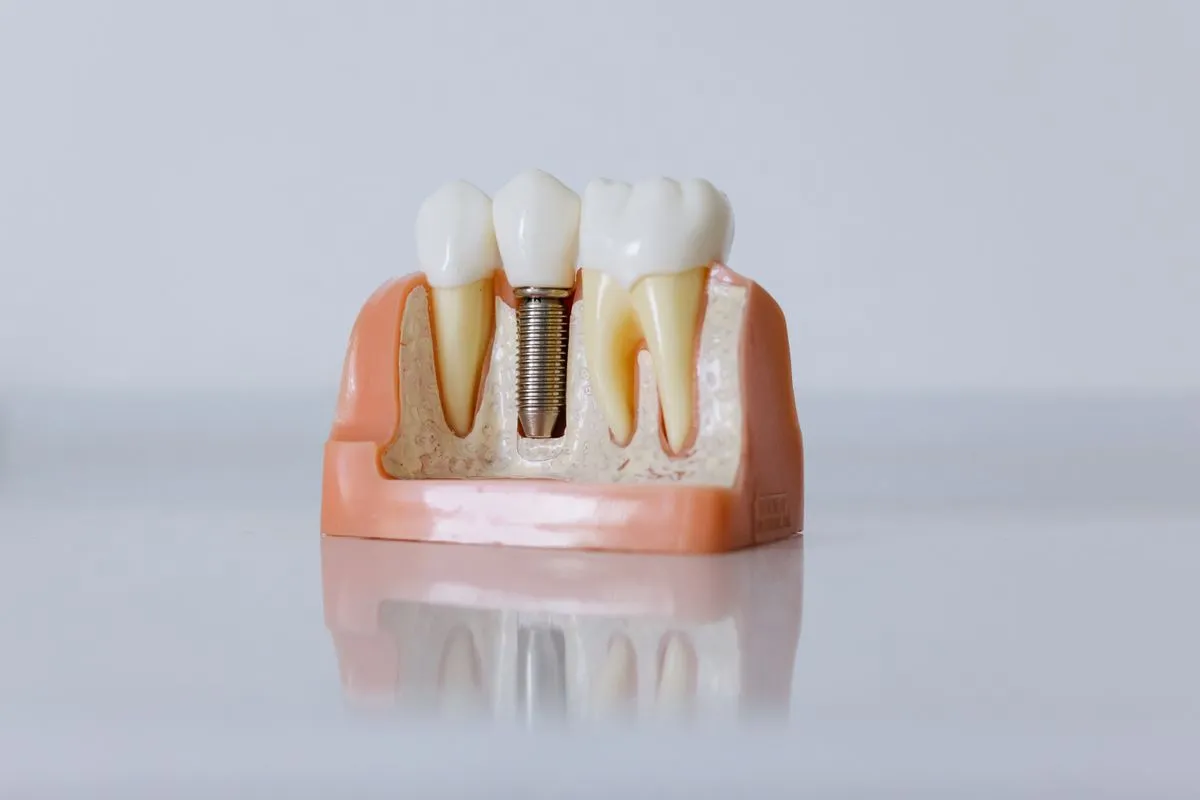
A dental implant is a small titanium post placed in the jaw where a tooth root used to be. Over a few months the bone bonds to it, and it becomes a fixed anchor for a crown that looks and works like the tooth you lost. Unlike a bridge, it does not rely on grinding down the teeth on either side. Unlike a denture, it does not move, and it stops the bone in that area from shrinking the way it does under an empty space.
We use implants to replace a single tooth, several teeth with a bridge on two or more implants, or to hold a full denture firmly in place for someone who is tired of one that slides.
Planning first
Every implant we place starts with a 3D scan of your jaw, taken in the clinic. It shows us exactly how much bone is there, where the nerves and sinuses sit, and the best angle for the implant. Dr. Ortega plans the position on the scan and, for most cases, makes a guide that fits over your teeth so the implant goes in exactly where it was planned. That is what makes the placement itself short and predictable.
The scan also tells us honestly whether an implant is right for you. If the bone is too thin, we discuss a graft to build it up first, or another option such as a bridge. If you smoke, have uncontrolled diabetes or take certain bone medications, we talk through the extra risk before you decide anything.
The steps
- Consultation and scan. We examine the area, take the 3D scan, and go through options and costs. You leave with a written plan and a price.
- Placement. A single implant takes about an hour under local anaesthetic. Most people are back at work the next day. If a tooth needs to come out first, we can often place the implant the same day.
- Healing. Three to six months while the bone bonds to the implant. You will have a temporary tooth if the gap is visible.
- The crown. We scan the implant, make a custom crown matched to your other teeth, and fit it. From then on you brush and floss it like your own tooth.
Bridges and dentures on implants
If you are missing several teeth in a row, two implants can carry a bridge of three or four teeth, which is often better value than an implant for every tooth. If you wear a full lower denture that will not stay put, two implants with clips turn it into a denture that snaps in and stays. Both are planned the same way, on the scan, with the cost set out before you commit.
Looking after an implant
Implants cannot decay, but the gum and bone around them can still get infected if plaque builds up, and that is the main reason implants fail. Cleaning around it every day and keeping your regular hygiene visits is all that is needed. We check the implant at every checkup and take an X-ray of it every couple of years to confirm the bone is stable.
Cost and insurance
An implant with its crown costs more up front than a bridge, and less over a lifetime, because it does not put load on the neighbouring teeth. We give you a fixed, all-in price for the implant, any graft, the temporary and the final crown, so there is nothing to add later. Many dental plans now cover part of an implant crown, and we check your benefits before quoting. Payment can be spread over the months of treatment.